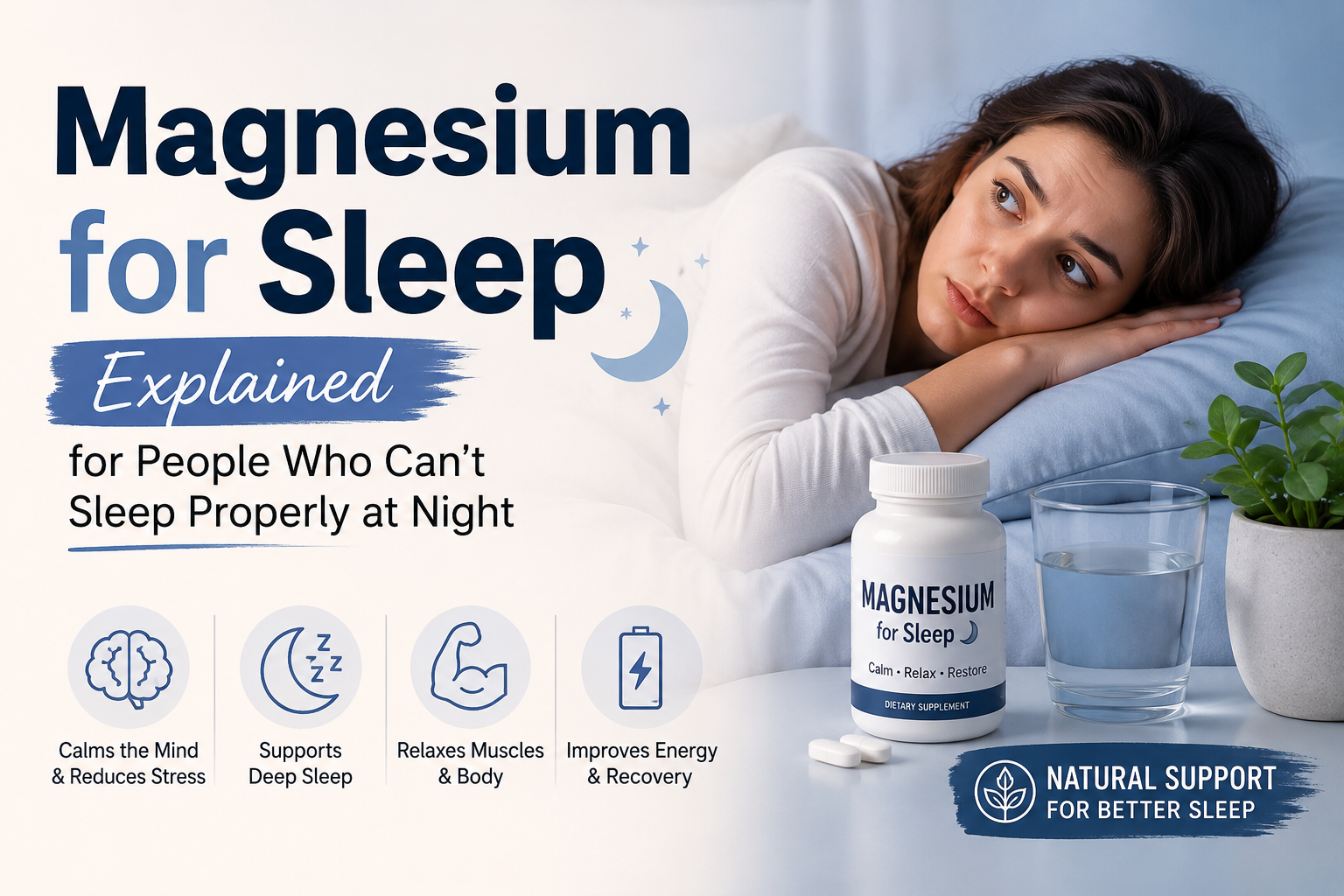
Magnesium for sleep supports the nervous system, helps to relax muscles and reduces muscle tension, which promotes deep sleep. It also manages melatonin and reduces insomnia severity. Magnesium for sleep may be the missing reason for feeling tired even after 7 hours of sleep. If your body lacks magnesium levels, it leads to restless sleep, mental stress and poor sleep quality because even if your eyes are closed, your brain will not switch off. Magnesium does not work the same for everyone. Results depend on dosage and timing, where most people are doing wrong.
How To Find Out If You Are Low In Magnesium
Many people have low magnesium, but they don’t even realize it. The symptoms don’t always feel serious at first, but they slowly affect your sleep, increase stress and drain your energy.
Muscle cramps or muscle tightness
Magnesium helps muscles to relax after contraction. When magnesium is low, muscles will start tightening or experience sudden cramps. It does not happen randomly. It’s because your muscle cells are struggling to balance calcium and magnesium. This may look normal, but later this symptom will disturb sleep because the body can’t fully relax.
Feeling tired even after sleep
Even after sleeping 7-8 hours, you will be still feeling tired. This is not because of a lack of sleep. It is because of sleep quality. Magnesium for sleep is very important. If the body doesn’t finish the complete sleep cycle, energy recovery will be incomplete. That’s why you feel tired even without doing any physical work.
Anxiety
Magnesium or magnesium powder helps to control the nervous system by calming brain activity. When magnesium levels drop, the brain becomes more sensitive and stops sending signals. Which makes you feel anxious without any reason.
Head Ache
Low magnesium can affect nerve signals and blood vessels, which triggers headache and may feel dull. It often happens because of too much screen time, not getting enough sleep and over-stress.
Not able to sleep properly
Magnesium supports melatonin and helps the brain to shift into sleep mode. When magnesium levels are low, the transition to sleep becomes unstable. This leads to waking up in the middle of the night or difficulty falling asleep. Even if you sleep, the depth of sleep reduces, so the body does not fully recover.
Common Causes of Low Magnesium Levels
Low magnesium levels don’t usually happen overnight. They build slowly because of habits that drain the body. What you eat is not the only factor. Your lifestyle is the deciding factor on how well you absorb and recover.
Poor diet and nutrition intake
Nowadays, these modern diets do not include magnesium-rich foods like leafy greens, nuts, dates and seeds. Processed food habits reduce the natural intake of essential minerals, and slowly magnesium levels reduces in your body.
Chronic stress and mental pressure
Chronic stress is one of the hidden reasons for low magnesium for sleep. If your body is experiencing constant stress, it uses more magnesium to regulate the nervous system. Which can later reduce the overall magnesium and affect sleep quality.
Poor sleep cycle
Poor sleep will not only make your body tired, but it also reduces magnesium for sleep levels further. When your quality sleep is interrupted or disturbed, your body will not get enough time for recovery and nutrient balance. This creates a cycle where low magnesium leads to poor sleep and poor sleep leads to even more loss of magnesium, which drains both energy and nutrition balance.
Caffeine and stimulation intake
Caffeine from tea, coffee and energy drinks may look like your body is getting enough energy. This actually increases the rate, but this caffeine makes your body lose minerals through urine. If it is consumed consistently on an empty stomach or later in the day, it leads to an imbalance of magnesium and minerals, which affects your sleep and body health. This creates a loop. If your body or mind feels tired, immediately look for caffeine again. The body becomes tired after some time and again wants caffeine. This makes your body addicted to caffeine, and later, your body loses minerals.
Poor Gut Health
Even if you consume more magnesium for sleep, your body might not absorb it. Gut health is the one that decides how minerals should be absorbed and used. Issues like poor digestion, imbalanced gut bacteria and frequent bloating can also reduce magnesium absorption. That is, your body will function. But it will affect your sleep, energy and stress levels.
How Magnesium Actually Helps You To Sleep
Magnesium for sleep does not make you sleep like a magic pill. It helps your body by giving a support to relax and recover easily.
Calms the nervous system
Magnesium for sleep helps in controlling the nervous system by reducing overactive brain signals. It promotes neurotransmitters that promote relaxation and help to lower stress responses in the body. When magnesium levels are balances the body can shift from a hyperactive to a calm stage, where your body feels relaxed, and it becomes easier to fall asleep.
Supports melatonin production
Melatonin is the hormone that controls your sleep cycle. Magnesium for sleep helps control melatonin levels and supports the body’s internal clock. When magnesium is very low, this becomes irregular and makes it harder to fall asleep at the right time.
Relaxes muscles
Magnesium or magnesium powder helps in muscle relaxation. It helps to release the muscle tension that have been built up during the day. When the muscles are firm and tight, it feels very difficult to relax at night. By reducing muscle tension, magnesium helps the body to stay relaxed.
Improves deep sleep quality
Magnesium not only supports muscle relaxation but also helps in improving the quality of deep sleep. Deep sleep is the stage that recovers both body and mental health. Instead of just increasing sleep duration, it increases the sleep quality time. Which means fewer disturbances at night, and the body is relaxed well, so you wake up fresh.
Why Magnesium Works For Some And Not For Everyone
Magnesium does not work the same for everyone because each body will not always have the same root cause. Magnesium or magnesium powder can support relaxation and sleep quality; its effectiveness depends on your current lifestyle, condition and how you use it.
Not everyone has low magnesium
Magnesium works for people who has low or borderline levels. If your body is having enough magnesium adding more magnesium may not create any noticeable difference in sleep. This is why some people get results quickly and some do not get anything.
Right type of magnesium for sleep
Not all forms of magnesium supports in sleep. Each magnesium have different formulas few for sleep and others for digestion. Using the wrong form of magnesium even with right dosage will not make any difference in sleep.
Dosage and timing affect results
Magnesium is not an instant sleep solution. Taking too little will not be effective, and taking too much will also cause side effects like digestive discomfort. Timing is also important. Most people have found better results during the evening time as it aligns naturally with the body.
Sleep problems caused by health issues
If sleep problems are caused by health issues like chronic insomnia, sleep apnea, or hormonal imbalances, then magnesium effectiveness will be limited. In such cases, solving the root cause is more important than just relying on supplements.
Which Magnesium Is Best For Sleep
Do you think all formulas of magnesium work best for sleep? No, Magnesium has different formulas and each formula is used for different problems. Choosing the right form is important because using the wrong form may not improve your sleep.
Magnesium Glycinate
Magnesium glycinate is one of the most commonly recommended forms for sleep. It absorbs easily and is gentle on the stomach, which makes it suitable for regular use. It also contains glycine, an amino acid that helps in relaxation and calms the nervous system. If your body is affected by sleep, this is a strong choice.
Magnesium Threonate
Magnesium Threonate is especially known to support brain function. It calms mental activity and may improve sleep quality. If your body is affected by overthinking, this is a strong choice.
Magnesium Citrate
Magnesium Citrate is highly absorbable, but it is mainly used for digestion and relieving constipation. It can provide magnesium levels, but if your goal is to improve sleep quality, this is not the right choice. In some cases, higher dosages can cause digestive discomfort.
Magnesium Oxide
Magnesium Oxide has low absorbability, which helps in mild digestion and cannot be used for deep sleep.
Magnesium Taurate
Magnesium Taurate specially focuses on heart health and blood pressure. It does not focus on improving sleep quality.
If your main goal is better sleep and a calm mind, Magnesium Glycinate is the best option.
How Much Magnesium To Take For Sleep
Magnesium dosage is not the same for everyone; the right amount depends on your lifestyle, body condition and magnesium level.
Recommended Dosage range
For most adults the common range is between 200- 450 mg per day. This amount usually enough for muscle relaxation.
Food and Supplements
Magnesium can also be taken in the form of nuts, seeds, leafy greens and dark chocolates. A healthy diet, a proper sleep routine with no mobile screen time for at least 10 minutes of sleep and a magnesium supplement. When these are combined, you can notice visible changes.
What to look for before buying a Magnesium Supplement
Before buying a magnesium supplement, check the ingredients for the magnesium range included in the supplement. Make sure the magnesium ingredient shows 400-450 mg.
Warning:
Not all magnesiums are the same; using the wrong type can leave your muscles weak, your brain becomes foggy, or your heart under stress. It is important to consult with a health expert before taking any supplement on your own.
How Long It Takes Magnesium To Work
Magnesium for sleep does not work like an overnight magic sleep pill. Results vary depending on magnesium levels, sleep habits and overall health.
Short-term effects
In first few days some people may notice mild relaxation within a few days, especially with low magnesium levels. They experience mild relaxation in their muscles and a calm mind at night. Anyway, these changes need time and cannot happen immediately.
Noticeable improvements
Consistent sleep improvements usually happen when you start using it consistently for a few weeks. The body starts restoring magnesium levels, which leads to better sleep quality with improved recovery.
Full Benefits
For deeper and stable results, use consistently for a few months. This allows the body to fully respond and recover.
Case Study About Magnesium For Sleep
Here are a few real case studies on how magnesium supports sleep.
Improvement in sleep quality within 4 weeks
According to the National Library of Medicine, in 2025. Published in Nature and Science of Sleep, the study shows that 155 adults had poor sleep quality. Participants who took 250 mg of magnesium bisglycinate daily showed a significant reduction in insomnia severity scores after 4 weeks compared to the placebo group.
The improvement was not instant, but it happened because of consistency. Sleep quality improved, especially with people who were already struggling with poor sleep.
Analysing multiple case studies
A systematic review published in BMC Complementary Medicine and Therapies in 2024 analysed multiple studies on magnesium for sleep. It was found that magnesium supplementation could reduce the time to fall asleep and improve overall sleep quality. But results may vary depending on the individual.
Magnesium does not force sleep, but it improves internal conditions and helps you sleep better.
Does Magnesium Help Skin To Glow From Within?
Glowing skin is not just from skin care. It often starts with how well your body recovers at night. Magnesium for sleep supports sleep quality, and this helps the body to repair both internally and externally.
Repair Cycle
Magnesium helps to improve sleep quality by calming the nervous system and promoting deep sleep. This is the time when your body repair skin cells, balances hormones and restores overall skin health making better skin. Poor sleep can slow this process by making the skin dull and tired.
Less stress impact on skin
Stress affects both sleep and skin health. Magnesium for sleep helps in balancing the nervous system. Which can reduce stress levels and support deep sleep. When stress is lower, it can reduce issues like tired appearance, puffiness and uneven skin tone that often come from poor sleep and mental stress.
Maintain Collagen
Magnesium helps to regulate sleep with melatonin. Melatonin is the hormone that controls your sleep cycle. During deep sleep, the body shifts into repair mode, where skin recovery and collagen maintenance take place. When sleep quality is poor, the process slows down which can later affect skin firmness and overall skin health. Magnesium indirectly helps to glow from within and transforms into better skin.
This is why poor sleep often shows visibly on the face all the time.
Mistakes to Avoid While Taking Magnesium
Most people are using magnesium for sleep incorrectly. Small mistakes, but it can reduce its effectiveness.
Expecting instant Results
Magnesium for sleep does not provide quick and instant results. The body needs time to adapt and results may vary depending on magnesium levels and lifestyle.
Depending only on supplements
Magnesium can support sleep, but if you are constantly exposed to stress, relying just on a supplement will not work. You should maintain a balance between a healthy lifestyle and supplements. Supplements alone will not give full results.
Ignoring sleep habits
Late-night screen use, irregular sleep timing, caffeine intake and high stress will not improve your magnesium levels. A balanced diet with healthy sleep habits will make a difference.
Magnesium Myths And Their Harsh Reality
Taking Magnesium for sleep has become more popular, mainly on social media. But everything you see on social media is not accurate. Some methods don’t work the way people think.
Do magnesium sprays and bath salts work the same way as a supplement?
Magnesium sprays and bath salts are mainly used for relaxation, but the amount absorbed through the skin is very low. They help you feel calm and relaxed due to warm water and consistent use. There is no proven evidence to improve magnesium levels in the body.
Does the “sleepy girl mocktail” guarantee deep sleep?
The viral sleepy girl mocktail is made up of tart cherry juice and magnesium powder. It is often promoted as an instant sleep solution. Tart cherry supports melatonin, and magnesium powder helps in relaxation. It is not a guaranteed fix for deep sleep. Its effectiveness depends on your overall sleep cycle and magnesium levels.
More magnesium means better sleep
Taking higher doses will not improve sleep; even higher dosages of magnesium can cause many side effects, such as digestive discomfort and more stress. The body only takes what it needs and not the quantity.
Magnesium can support sleep, but it is not a shortcut.
Side Effects Of Magnesium and Who Should Be Very Careful
Magnesium for sleep is generally safe for most people when taken in the right amount and right form. But like other supplements, magnesium also has side effects if not used in the right way or in certain conditions.
Common side effects
Most side effects of magnesium are mild and related to dosage. The most common side effects are stools, stomach discomfort, or cramps. This usually happens when the dose is high or when your body cannot tolerate that specific form. So find the right one.
What happens if you take too much
Taking high amounts of magnesium can lead to symptoms like nausea, diarrhoea, weakness or even irregular heartbeat in severe cases. The risk is higher when your body cannot remove the excess magnesium.
Who should be more careful
Some people should be cautious before taking magnesium. Especially the ones who have kidney problems because of excessive supplements your body cannot tolerate and cannot remove. It is very important to ask expert guidance before intake.
When To See A Doctor?
Magnesium can support better sleep, but it cannot be the only solution for all sleep problems. In some cases, sleep issues may be a sign of a severe medical condition that needs proper medication.
Sleep problems lasting more than a few weeks
If you are consistently struggling to fall asleep or stay awake for more than 2-3 weeks, it may not be just because of low magnesium. There might a severe health condition connected to sleep.
Low Energy
Feeling tired occasionally is normal, but constant low energy even after 7 hours of sleep may be a signal for a health condition that needs attention.
Breathing Issues during sleep
Symptoms like loud snoring, gasping, and difficulty in breathing during sleep could be because of sleep disorders like apnea. Magnesium supplements will not solve this condition.
Unusual Symptoms
If you experience symptoms like irregular heartbeat, severe weakness or digestive issues after taking magnesium, immediately stop it and consult a doctor.
Wrap Up
Magnesium for sleep is not an instant solution, but it acts as a support for your body. Magnesium calms the nervous system, supports deep sleep and relaxes muscles. But results depend on how you use it and your daily lifestyle. The result does not happen immediately; it takes time to recover. Changes start small, but later with consistent effort, you will notice a big change in your body. Better sleep does not come from forcing; it comes from support. If you want more simple, real insights on sleep, skin, and wellness that actually work in real life, follow Glow Insider. No hype, no shortcuts just what your body actually needs.
FAQ
What type of magnesium is best for sleep?
Magnesium glycinate is most commonly recommended for sleep because it is easily absorbed and helps calm the nervous system. Magnesium threonate may help with overthinking, while citrate is more for digestion.
How much magnesium should I take for sleep?
Most adults take between 200 – 450 mg per day. It’s better to start low and increase slowly based on how your body responds.
What is the best time to take magnesium for sleep?
Magnesium for sleep is usually taken 30–60 minutes before bedtime to support relaxation and help the body prepare for sleep.
How long does magnesium take to work for sleep?
Some people notice mild relaxation within a few days, but noticeable sleep improvements usually take 2–4 weeks of consistent use.
Can I take magnesium every night?
Yes, magnesium for sleep can be taken daily in the right dosage. Consistency is important for better results.
What are the signs of low magnesium?
Common signs include muscle cramps, tiredness even after sleep, anxiety, headaches, and trouble falling or staying asleep.
Who should not take magnesium supplements?
People with kidney problems or certain medical conditions should consult a doctor before taking magnesium for sleep, as the body may not process excess amounts properly.
What are the side effects of magnesium?
Common side effects include loose stools, stomach discomfort, or mild cramps, especially at higher doses.
Can magnesium help with anxiety as well as sleep?
Yes, magnesium for sleep supports the nervous system, which may help reduce stress and anxiety, indirectly improving sleep quality.
Why doesn’t magnesium work for everyone?
Magnesium for sleep works best for people with low or borderline levels. If your magnesium levels are already balanced, the effect may be minimal.
Can I take magnesium glycinate every day?
Yes, magnesium glycinate is generally safe for daily use when taken in the right amount.
What foods are high in magnesium?
Foods like leafy greens, nuts, seeds, whole grains, and dark chocolate are good natural sources of magnesium for sleep.
What should I avoid when taking magnesium?
Avoid taking high doses of magnesium for sleep, combining it with excessive caffeine, or relying only on supplements without improving sleep habits.
What are the signs of too much magnesium?
High magnesium for sleep intake can cause nausea, diarrhoea, weakness, or irregular heartbeat in severe cases.
Does magnesium help you fall asleep faster?
Magnesium for sleep can reduce the time it takes to fall asleep by calming the nervous system and supporting melatonin regulation.




1 Comment
Your comment is awaiting moderation.
What an engaging read! You kept me hooked from start to finish.
Your comment is awaiting moderation.
This was easy to follow, even for someone new like me.
Your comment is awaiting moderation.
I appreciate how genuine your writing feels. Thanks for sharing.
Your comment is awaiting moderation.
So simple, yet so impactful. Well written!
Your comment is awaiting moderation.
I never thought about it that way before. Great insight!
Your comment is awaiting moderation.
This is now one of my favorite blog posts on this subject.
Your comment is awaiting moderation.
Great points, well supported by facts and logic.
Your comment is awaiting moderation.
This is one of the best explanations I’ve read on this topic.
Your comment is awaiting moderation.
I appreciate your unique perspective on this.
Your comment is awaiting moderation.
This post cleared up so many questions for me.
Your comment is awaiting moderation.
I appreciate how genuine your writing feels. Thanks for sharing.
Your comment is awaiting moderation.
This is now one of my favorite blog posts on this subject.
Your comment is awaiting moderation.
Great article! I’ll definitely come back for more posts like this.
Your comment is awaiting moderation.
You’ve sparked my interest in this topic.
Your comment is awaiting moderation.
“Great post, it perfectly captured the essence of the topic.”,
Your comment is awaiting moderation.
Very informative content and written in a simple style. I appreciate the effort behind this article because it answers common questions clearly. Looking forward to reading more helpful health related posts from your website soon.
Your comment is awaiting moderation.
Every day is a new beginning
I love how clearly you explained everything. Thanks for this.